SITE-SPECIFIC ENGINEERING
Designed for place.
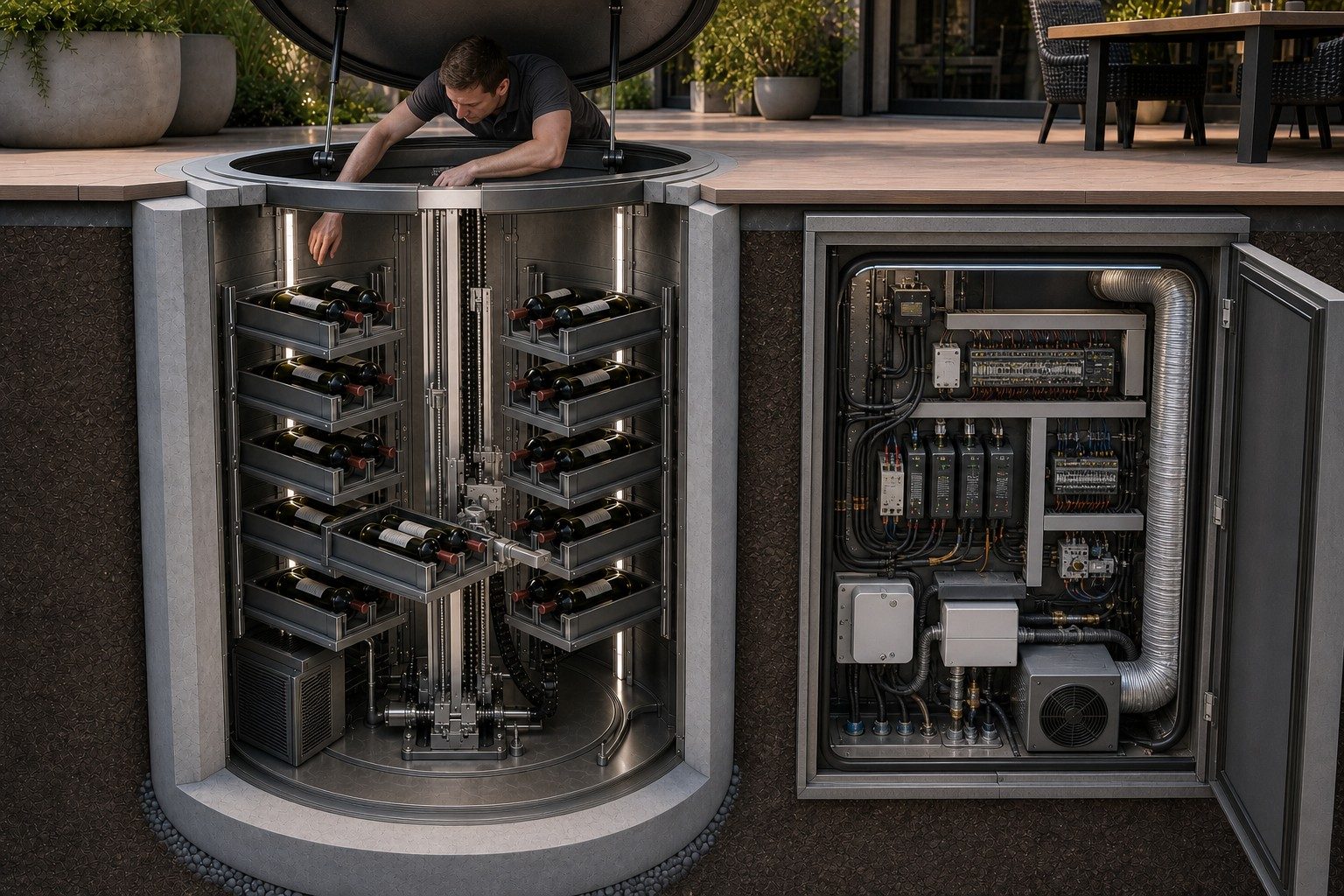
An underground robotic system is not a drop-in appliance. Every installation must respond to its soil, groundwater, structure, drainage, access and local approval conditions.
01 / BEFORE DESIGN
Understand the site
before the cellar.
The project begins with qualified site investigation and authority coordination—not excavation. The required scope depends on location and may include planning permission, heritage consent, utility detection, geotechnical investigation and groundwater assessment.
| Site information | Measured survey, access, boundaries, buildings, vegetation and intended lid position. |
|---|---|
| Below ground | Utility survey, soil profile, bearing conditions, groundwater level and contamination risks. |
| Approvals | Planning, building-control, heritage, drainage and electrical requirements determined locally. |
| Construction access | Safe excavation, lifting, spoil removal and later service access. |
02 / COORDINATION
One installation.
Several disciplines.
Water management
The design must prevent surface water entering at garden level, resist groundwater conditions established for the site, manage condensation and provide a maintainable drainage strategy. A pump is not a substitute for a complete waterproofing concept.
Power and controls
Electrical supply, protective bonding, disconnection, control cabinet location, network connection and emergency operation require design and commissioning by qualified specialists.